| Status: | Active, open to new members |
| Contact: |
Note: If the group status is not shown as "active, open to new members" and you want to be put on a waiting list or enquire about the group, please contact the Group Contact.
There is a set route on Tunbridge Wells Common and one at the TW Cemetery.
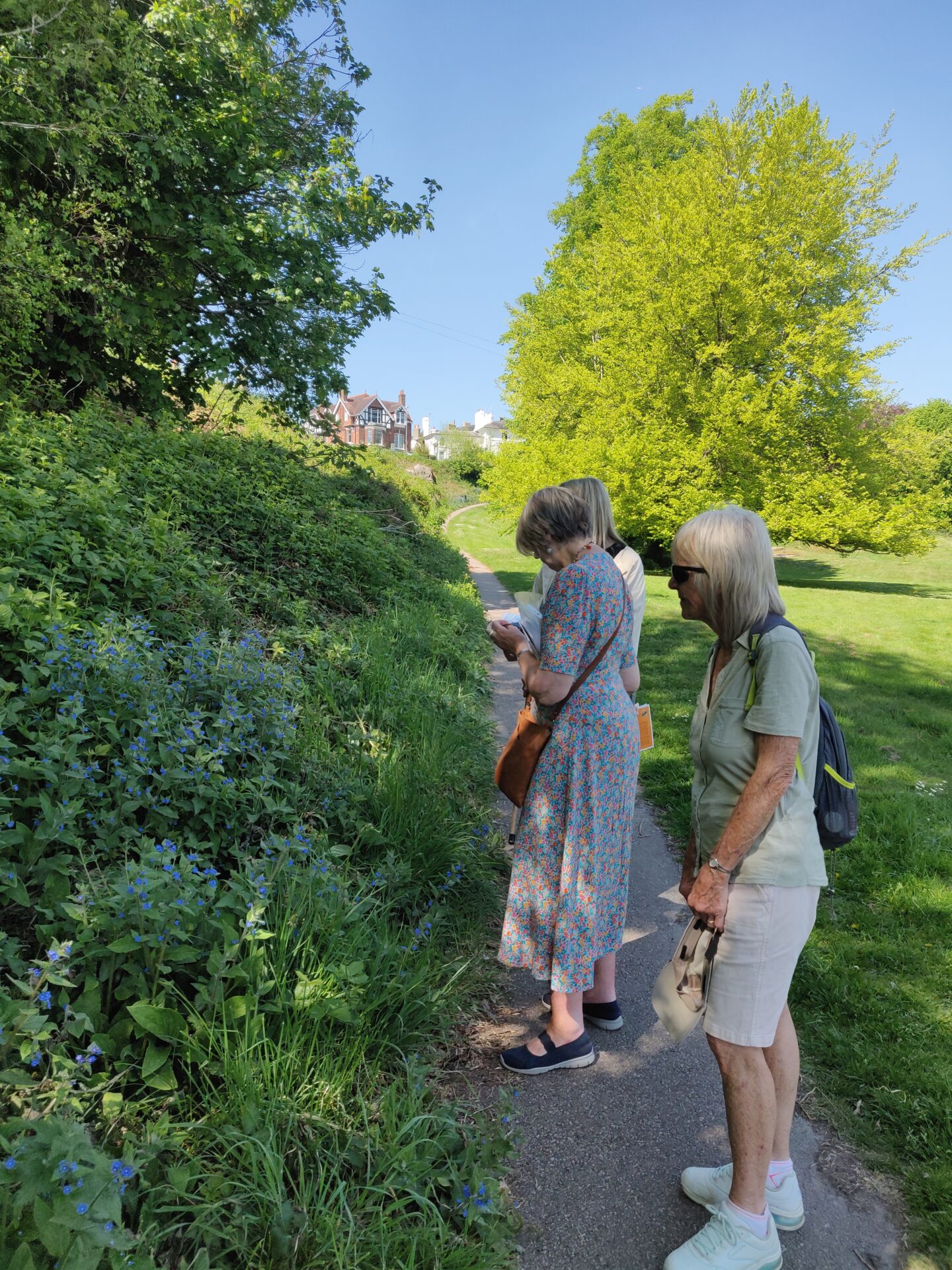
These monitoring walks, of about 1 km each, take place during the 2nd and 4th week of the month. The actual day cannot be definite as the bees can only be counted when the weather is suitable - i.e. not too wet or windy. Only an interest in wildlife is necessary.
The Bee Walkers group meet monthly from March to October and walk the same route every time, noting the bumblebees (and other bees) that we spot. There are 7 common bumblebees in our area and we normally see buff and white tailed ones, red tailed and tree bumblebees. We also see common carder bees and occasionally cuckoo bees. These parasitic bees lay their eggs in bumblebee nests and rely on host workers to feed their young. Bees are normally buzzing from flower to flower collecting nectar and pollen for their nest, but if you see some just chilling in flowers, they’re normally cuckoo bees.
This is a ‘proper’ research group and we report our findings to the Bumblebee Conservation Trust. We agree the route with them first, and make sure that we only record bees at a set distance from us, so there is no double-recording and our figures can be relied on. Our original walk is across the Common has run since 2023 and last year we added another walk at Tunbridge Wells Cemetery. We’ve learnt where to find them at different times of the year, when there is plentiful food. On the Common they rely on dandelions, gorse, blackberries and ivy flowers. We see many more at the Cemetery, as flower beds are planted with lots of bee friendly plants and there are weeds in the older areas. In July, we saw nearly 300 there, compared with 19 on the Common!
We all know how important insect pollinators are, but bumblebees in particular are one of the few species that can pollinate important crops such tomatoes, blueberries, kiwis and aubergines. So, understanding their spread and numbers is very important, especially as they are in decline. Extra eyes are always useful, if you want to join us next year.
April count:
Counting the bumblebees on TW Common was not too difficult this April as there were very few! The temperature was 25 degrees, so maybe a little warm and the plants were looking very dry. However, we did spot a Hairy-footed Flower Bee (very small, black and fast moving) on the Horse Chestnut flowers.