We were so lucky to enjoy a wonderful day in lovely sunshine after such changeable weather!
On arrival at the Park we had a very interesting presentation with slides given by Chris on the history of the park and what we were likely see during our visit. We were also offered complimentary cups of tea and coffee, which were very welcome! We were given maps of the gardens with suggested paths to best enjoy the follies and views.
The landscape garden was created in the 18th century by Charles Hamilton, He was born in 1794 and was the ninth son and fourteenth child of the Earl of Abercorn. After an education at Westminster and Oxford he went on two Grand Tours and was much influenced by the art and architecture of Italy. From 1738, Hamilton began acquiring land at Painshill and over the next thirty-five years dedicated himself to turning this rough heathland into a vision of idealized beauty. He laid out grassland, planted woodland and shrubberies, and created an artificial lake with islands. Ornamental garden buildings and features in a variety of styles completed the picture. Many of the plantings were of newly available ‘exotic’ species from North America and elsewhere the art, architecture and landscape of Italy are featured.
Following the red route we first encountered the bronze sculpture titled The Sabine Group, relating to the rape/abduction of a Sabine woman, which was located at the east end of the park’s Ampitheatre, which is now known as The Great Lawn, forming a sweeping, natural landscape feature. Passing the vineyard, which produces award-winning English sparkling and rose wines, we then passed the Gothic Temple, a ten-sided building constructed of timber and rendered to resemble stone, its open sides perfectly framing the landscape views.
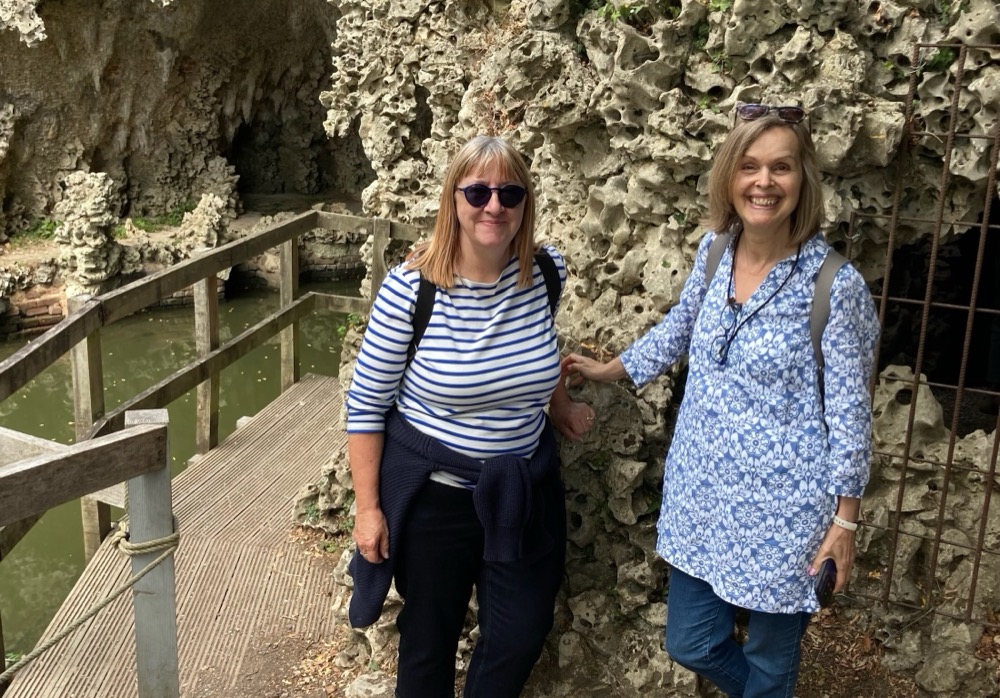
Crossing over the picturesque Chinese Bridge we entered the spectacular Grotto, a magnificent man-made cave lined with over 10,000 sparkling crystals, shells and minerals. For me it was the stand-out attraction of the Park as it’s so unusual. The fake stalagmites were designed to catch and reflect sunlight coming off the lake outside, which made the crystals sparkle as it bounced off the coral pools and lake water.
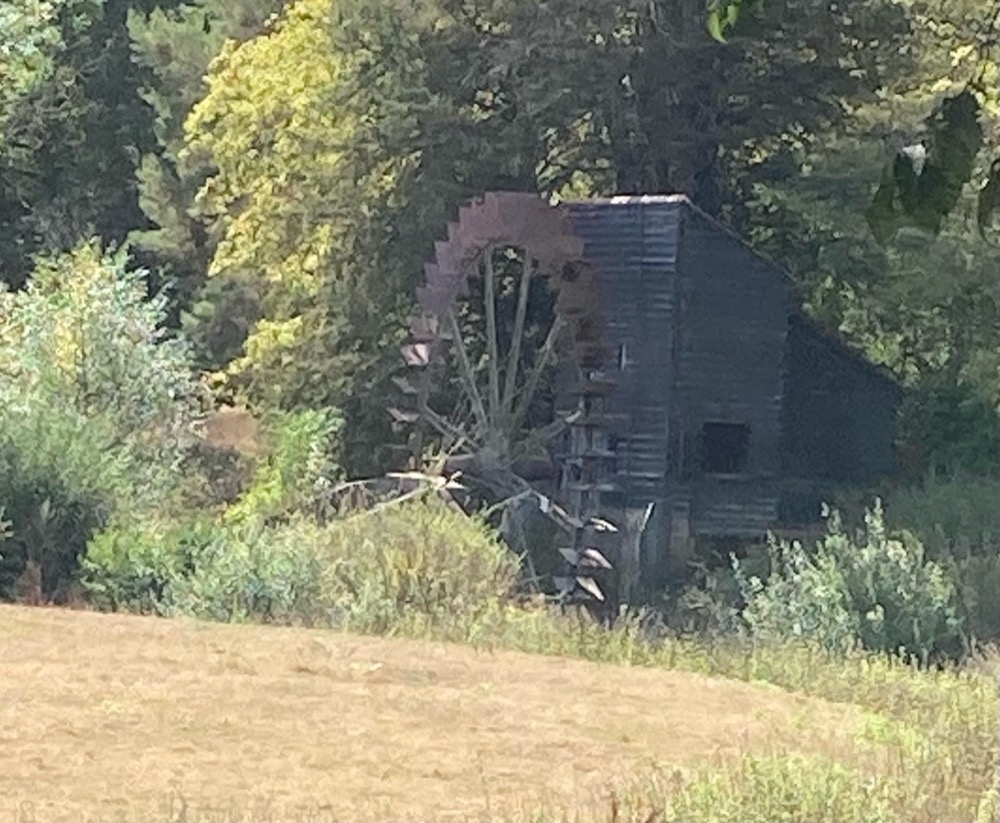
Passing over the Woollett Bridge, the next feature was the ruined Roman arch, surrounded by dark yew trees, was meant to remind visitors of the transience of life. The path led to the to the historic 10.6 metre iron waterwheel built in the 1830’s which normally pumps water from the River Mole to fill the landscape’s 14 acre Serpentine Lake, but was inactive during our visit, due I imagine to the drought conditions.
The next highlight was the Gothic Tower, 27 metres tall, built at the Park’s highest point. From the top you are rewarded with a view that includes four different counties.
Crossing the Elysian Plains, we came across the Temple of Bacchus, a stunning classical folly which was rebuilt between 2017 and 2018. The façade was painstakingly reconstructed and the ornate ceiling plasterwork was based on early drawings by neoclassical architect Robert Adam. Visitors are greeted by the 7-foot marble statue of Bacchus (the Roman god of wine) and the temple features 12 marble busts of Roman Caesars collected during Charles Hamilton’s Grand Tours of Italy. The temple also offers breathtaking panoramic views across the Surrey Hills.
Nearby was the Turkish Tent which offered visitors a place to sit, rest and admire panoramic views across the Serpentine Lake, the Five Arch Bridge and the Gothic Temple. It was likely inspired by Ottoman military tents popular in European landscape design at the time. Historians also believe it represents the legendary tent of Darius, where Alexander the Great freed captive women and slaves.
We then crossed the Five Arch Bridge and walked along the lakeside, which offered views of a ruined abbey, which was built on the early 1770s and was the final structure constructed at the park by Charles Hamilton. In the 18 th century monasteries and abbeys would often produce wine so the architecture complements the vineyard net to it. It was designed to be a ruin to add an air of history and remind the visitor of the past.
Passing the boat house, we were delighted to come across Mr Hamilton’s Tea Room, with inviting tables set in the shade of the Visitor’s Centre. We enjoyed sampling the excellent selection of pastries, cakes and snacks and there was also a lunch option if required.
We had a fantastic day out and many thanks to Joan for organising such a lovely outing.
Pam Booty